Asana acquires StackAI — now every human-agent workflow runs in one place.Learn more
Design brief: How to write one + template examples


Summary
If you want to set yourself up for success on your next design project, start with a design brief. A design brief creates a structured roadmap for your project and helps facilitate better communication for everyone involved.
In this guide, we cover what a design brief is, the benefits of creating one, how to write a design brief, and the elements you should always include. Plus, check out an example design brief template to get you started.
Discover the latest trends in strategic marketing collaboration
The secret to high-performing marketing teams? AI. Asana and Meltwater collected insights from 830 marketers to share their insights. Unlock the strategies marketing leaders are using to drive real business impact.
What is a design brief?
A design brief is a document that outlines the core details, goals, and expectations of a design project. It serves as a shared roadmap that aligns the client and the designer, ensuring everyone is working toward the same outcome.
Tip: For more technical projects, teams can use a design document template to capture system requirements, specs, and dependencies in one place.
Any company that utilizes design resources can benefit from having designers create a brief before their project, whether those designers are in-house or freelance. For this article, we'll use "client" and "company" interchangeably to refer to the party commissioning the design project.
![[inline illustration] what is a design brief (abstract)](https://assets.asana.biz/transform/afa66fda-5086-4acd-8d32-e28063b3d76e/inline-project-planning-design-brief-1-2x?io=transform:fill,width:2560&format=webp)
A design brief starts by explaining why a new design is necessary. This includes how the design will benefit the target audience, advance the brand voice, and fit within the broader competitive landscape.
Teams looking for a more visual way to frame those goals can also try a vision board template to translate ideas into an organized and inspiring direction.
Finally, the brief includes project details, deliverables, budget, timelines, and scope so that everyone has the same expectations. Design briefs are great for keeping both client and design teams aligned.
Design brief vs. creative brief
If you've never created one before, a design brief might seem a lot like a creative brief. Overall, a design brief handles more of the preproduction and business side of the project, while the creative brief tackles the innovative execution.
A well-crafted design brief gives both parties a solid plan for how they'll accomplish their goals. It's a great guide to look back on if one party ever feels like the progress is getting off track or a disagreement arises.
Once you've done the research for a design brief, your team will use a creative brief to dive deeper into the company and target audience, tailoring your designs to their needs. This second brief is a more in-depth look into how your design will speak to their customers, what elements you want to include, and the reasoning behind your artistic decisions.
Why use a design brief?
There are many advantages to having a design brief when starting a new project. It gives you time to truly understand a company and its audience. A design brief also reassures the client that their opinion is valued and that all parties have the same end goal.
By using a design brief, you can:
Create a more trusting designer-client relationship.
Gain insight into the brand and target audience.
Invite the client to be more involved in the project.
Align on a reasonable timeline and budget before the project begins.
Set standards for the quality and types of deliverables required.
Who writes the design brief?
Design briefs can be written by different parties depending on the project structure and working relationship. Understanding who takes ownership helps set expectations from the start.
Client-led briefs: The client writes the initial brief when they have a clear vision and detailed requirements to communicate.
Designer-led briefs: The designer drafts the brief based on discovery meetings, which helps when clients aren't sure what information to include.
Collaborative briefs: Both parties contribute to a shared document, combining business knowledge with design expertise for the most thorough results.
As with any project brief, both parties should review and approve the final document before work begins. This shared agreement, similar to a project charter, helps prevent miscommunication and sets clear expectations for the project ahead.
What to include in your design brief
Design briefs come in many different forms, but certain elements should be included each time. Once you've covered the basics, you can customize the brief depending on the project type or client.
A strong brief provides context for your creative choices and clarifies how those choices support the client's goals. It should include all the information needed to outline the project from start to finish.
![[inline illustration] elements of a design brief (infographic)](https://assets.asana.biz/transform/7b402d0b-3f45-4283-b7b9-b99b85f1549d/inline-project-planning-design-brief-2-2x?io=transform:fill,width:2560&format=webp)
Overview
Start your design brief by listing out information about the company the project is for. This starting point helps you gain stakeholders'trust by demonstrating that you understand their market, industry, and brand guidelines.
The project or brand overview typically includes details such as company size, contact information, past projects, and current design needs. Once the overview is finalized, everyone will have a quick summary on hand to refer to as needed.
Questions to ask:
What are the client's unique aspects?
What does the company do?
What are their brand guidelines and expectations?
What themes or common motifs are important to their brand?
What are the client's primary needs? How can we meet those needs?
Project scope and overview
Once you've written out a brand overview, it's time to give a detailed description of the design project being executed. This description summarizes what you'll be working on, why this work benefits the client, and everyone's roles and responsibilities.
This is also an opportunity for you to clarify the project scope, which outlines exactly what is needed to accomplish a project. The scope of the project should be agreed upon by both parties to avoid confusion or tension throughout the design process.
Questions to ask:
What designs will we create?
What issues are we trying to solve with these new designs?
What are the client's expectations of this project?
What is within scope? What is out of scope?
How will we manage scope creep?
Design goals and objectives
After an overview of the project and the company is complete, it's important to explain the goals and objectives for the project. This section should focus on the design problem to solve and the steps your team will take to address it.
In this section, you should also outline the purpose of the project and lay out concrete steps for how you will reach the goal in mind. This section should provide a clear path to completing the project, so keep it as specific as possible.
Questions to ask:
What will make this a successful project?
What steps do we need to take to accomplish our objectives?
What are our project goals for this design?
What metrics will we use to measure success?
Target audience
Understanding a client's customers is critical for creating designs that resonate. Use a design idea board to clarify and contextualize your client's audience and build a persona with them in mind.
Your client might already have a persona your designers can use. If not, create an ideal customer profile based on demographics, psychological characteristics, and hobbies to form a clear picture of who your design work is for.
Questions to ask:
What are your customers'favorite hobbies?
What are your persona's demographics and psychological traits?
How will your product or service help your target audience?
What does your target audience want?
What important characteristics affect your target audience's behavior (whether that's age, sex, region, etc)?
Budget and timeline
One of the most important steps is documenting an agreed-upon project budget and timeline. Many clients don't realize how long each stage takes, so having clear estimates helps set expectations.
Be realistic about the time needed to research, plan, create, and revise. Leave room in the schedule and budget for unexpected changes or difficulties.
Questions to ask:
How long will this project take from start to finish?
What is the budget for this project?
How long should it take to receive feedback?
How frequently will you and your client update your project timeline tool?
Competitor analysis
Every organization has competitors, and understanding them is essential. Study the competition's past design successes and mistakes to inform your creative direction.
With a strong grasp of the competitive landscape, you can create designs that stand out and make better decisions for your client's brand.
Questions to ask:
Who are the company's competitors?
What designs have been successful for the competition in the past?
What makes our brand stand out against competitors?
Has my client created a competitive analysis I can review?
Project deliverables
All the information you've filled out and the research you've done to create a plan for their design are essential to explaining the project deliverables. This is what the client will receive and what the end product will be.
Project deliverables will vary depending on the size, scope, and budget of the project. Setting clear standards and writing out the deliverables will help ensure there are no misunderstandings at the end of the project.
Questions to ask:
What will the end result look like?
What are the deliverables for this project?
What are the major project milestones throughout the process?
Design brief template
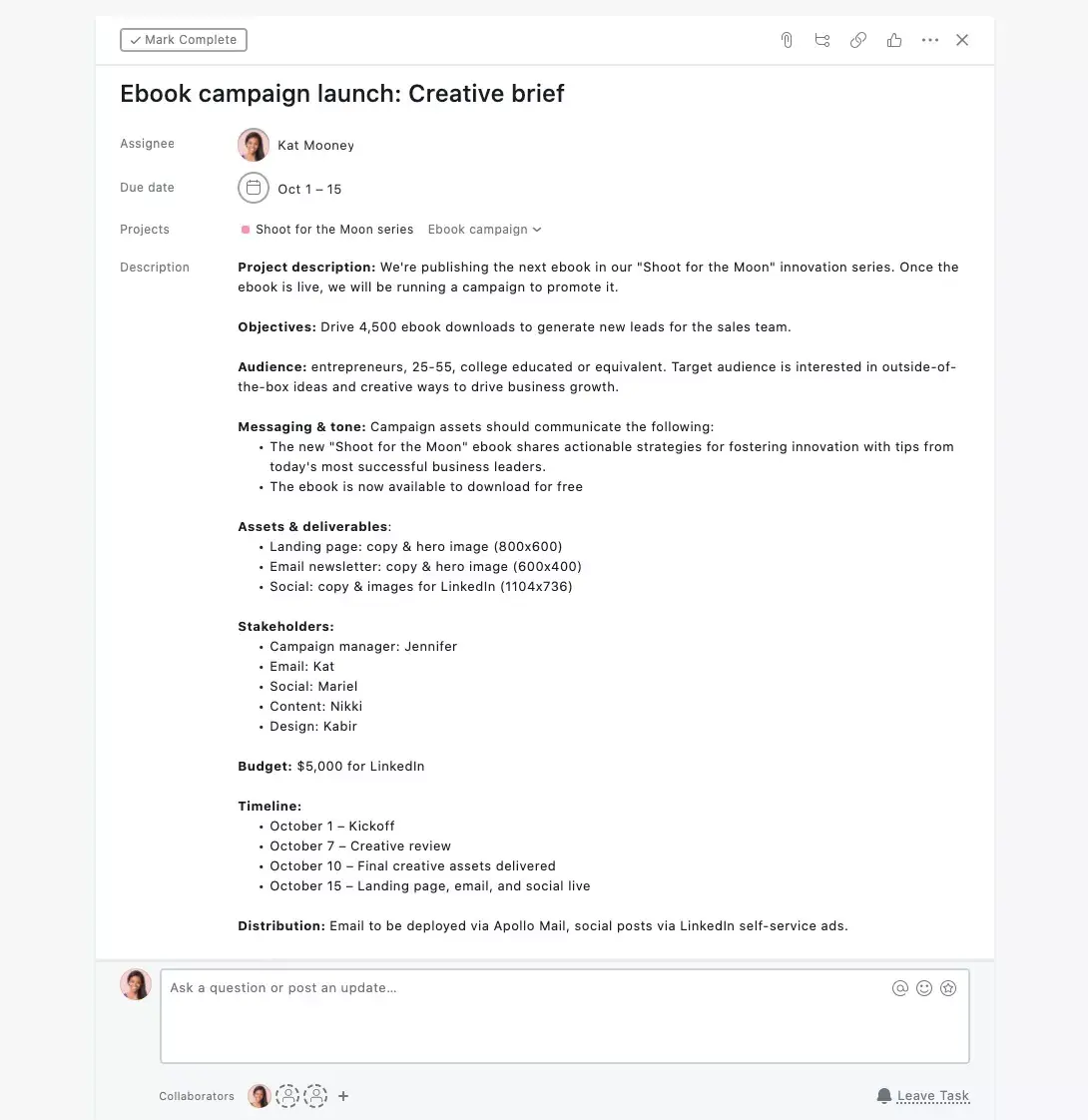
Check out our design brief template below to make creating an effective design brief simpler. Below is a sample design brief for an ebook campaign launch; it can be customized to fit any project. Use this as a starting point for your own brief to make sure all the details are covered up front.
Then, take your brief a step further by building your client pitch with a design proposal template that outlines goals, deliverables, and timelines in one place.
![[inline illustration] what does a design brief cover (infographic)](https://assets.asana.biz/transform/685073bc-0fa2-4dac-910f-407a00ff1754/inline-project-planning-design-brief-3-2x?io=transform:fill,width:2560&format=webp)
Design brief example
Use this template as a starting point to further customize a brief that works for your team.
Overview
What is your project and what is the scope?
Objectives
Why is this project important? What are you trying to achieve?
Target audience
Who are you targeting? The more specific, the better.
Budget
What is the overall budget? How should it be spent?
Timeline and deliverables
Outline the date and description for each deliverable.
Benefits of creating a design brief with Asana
Creating your design brief in a shared online system offers key advantages:
Centralized access: When you create a brief in Asana, all stakeholders can access the same information, keeping everyone aligned on goals and timeline.
Instant answers: Clients can find answers to their questions directly in the tool without waiting for a response.
Streamlined intake: Designers can use Forms to automatically collect all the information they need, so they can start work as soon as a request comes in.
Design briefs drive successful projects
A well-written design brief will help provide shared clarity surrounding your project goals and deliverables. With Asana's creative production tools, you'll be able to streamline your design projects, and your team will be able to deliver great work time and time again. Ready to bring more structure to your creative workflow? Get started with Asana today.
Explore workflows for creative teams