Asana acquires StackAI — now every human-agent workflow runs in one place.Learn more
Team roles: Belbin’s 9 roles to build a balanced team


Summary
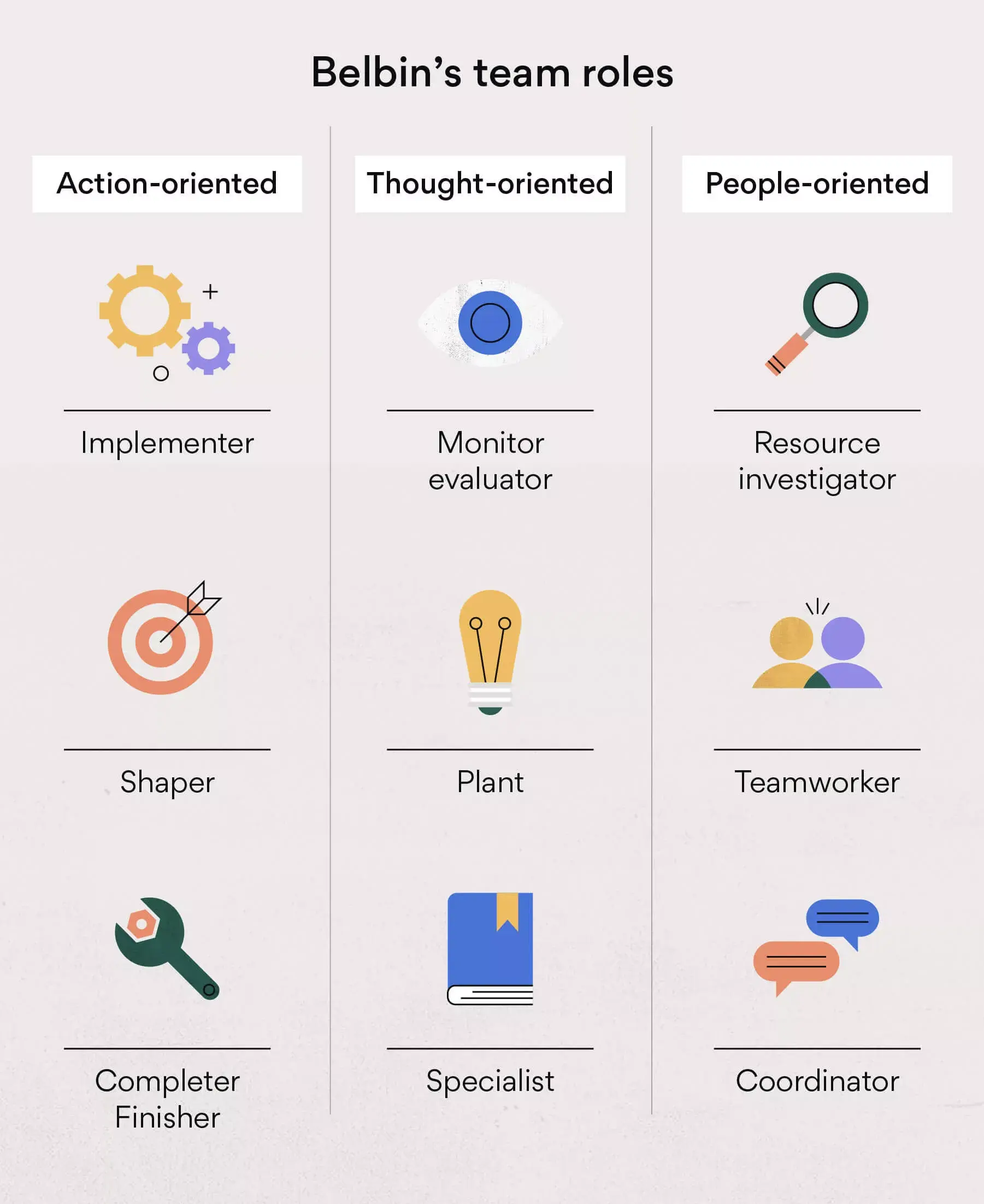
For teams to be most productive, everyone should have a specific role that aligns with their strengths. Dr. Meredith Belbin's team role theory identifies nine behavioral types that fall into three categories:
Action-oriented: Team members who execute and meet deadlines
Thought-oriented: Critical thinkers who generate ideas and analyze problems
People-oriented: Communicators who support and connect the team
In this guide, we'll discuss all nine team roles, explain why they matter for collaboration, and show you how to build a balanced team that drives productivity.
Optimizing your tech stack for the AI era
From security risks to productivity loss, app sprawl may be costing you more than you think. Our latest guide reveals the true impact of an oversized tech stack and provides strategies to optimize your IT spend. Don't let hidden costs hold you back:
What is a team role?
A team role is a pattern of behavior that describes how a person contributes to and interacts with a team. Unlike job titles, which define what someone does, team roles focus on how they naturally approach work and collaboration.
Dr. Meredith Belbin developed the concept after studying team dynamics at Henley Management College. His research revealed that successful teams aren't composed of the smartest individuals, but rather of those with a balanced mix of complementary behavioral styles.
Belbin identified nine distinct team roles, which fall into three categories:
Action-oriented roles: Shaper, Implementer, and Completer Finisher
Thought-oriented roles: Plant, Monitor Evaluator, and Specialist
People-oriented roles: Coordinator, Teamworker, and Resource Investigator
Category | Role | Key contribution |
Action-oriented | Shaper | Drives progress and overcomes obstacles |
Action-oriented | Implementer | Turns ideas into practical action |
Action-oriented | Completer Finisher | Ensures quality and meets deadlines |
Thought-oriented | Plant | Generates creative ideas and solutions |
Thought-oriented | Monitor Evaluator | Analyzes options and makes sound judgments |
Thought-oriented | Specialist | Provides in-depth expertise in a specific area |
People-oriented | Coordinator | Clarifies goals and delegates effectively |
People-oriented | Teamworker | Supports others and builds team cohesion |
People-oriented | Resource Investigator | Explores opportunities and builds external contacts |
Understanding these roles helps you assign tasks effectively, resolve conflicts, and improve team effectiveness.
Action-oriented team roles
Action-oriented team members are the doers on your team. They thrive under pressure, meet deadlines consistently, and turn ideas into reality.
1. Shaper
Shapers are team members who drive the team forward. They are action-oriented, motivating themselves and others despite any issues that arise. As natural leaders, they do well in management roles and are quick to find solutions when a crisis occurs.
Example of the shaper team role: Using a product marketing team as an example, the shaper would be the head of product, overseeing the team's vision and the roadmap to get there.
No more silos: Optimizing your organizational structure for stronger cross-team collaboration
In this ebook, learn how to structure your organization to prevent silos, move faster, and stay aligned in the face of change.

2. Implementer
Implementers are action-oriented team members who maintain order in their environments. They're practical and thrive at bringing ideas to fruition. These highly disciplined individuals may be the backbone of a team because they can confidently support their peers.
Example of the implementer team role: The implementer would be a data-driven business analyst on the product marketing team, assessing ways to improve the organization's processes.
Read: Efficiency vs. effectiveness in business: Why your team needs both3. Completer finisher
Completer finishers are heads-down individuals who notice fine details and strive for perfection. These team members may be more introverted, but they're valuable because they push team members to produce high-quality work.
Example of the completer finisher team role: Completer finishers would do well in tech support. They know how to identify and fix problems both quickly and efficiently.
Thought-oriented team roles
Thought-oriented team members are the thinkers and analyzers. They bring creativity, expertise, and critical thinking skills to your team.
4. Plant
The plant is a thought-oriented team member who's an innovative and creative thinker. Plants prefer to brainstorm and solidify their own ideas before sharing with the greater team. They may prefer to work alone, but they bring valuable input even if they aren't as outspoken as other team members.
Example of the plant team role: Plants are highly creative, which is why they would make great product designers.
5. Monitor evaluator
Monitor evaluators are rational thinkers who put emotions aside for problem-solving. They work best on projects requiring advanced knowledge and strategic planning. They assess ideas to determine their viability, then take steps to push them forward.
Example of the monitor evaluator team role: Monitor evaluators are your hyper-organized project managers, strategically scoping projects and connecting the dots across teams.
6. Specialist
Specialists have in-depth knowledge in their field and like to contribute to one area of expertise. They work better alone than in a group. Although more independent, they provide a lot of value to the team with their specific skill set.
Example of the specialist team role: Specialists may be your coders, your SEO analysts, or your technical crew; their job is specialized in a skill the rest of the team may not know much about, and thankfully, they have it covered.
People-oriented team roles
People-oriented team members are the connectors and collaborators. They excel at communication, building relationships, and keeping the team working together smoothly.
7. Coordinator
The coordinator is a team member with great communication skills. Coordinators are often in leadership positions because they promote collaboration and motivate the team to accomplish their goals. Other team members look up to coordinators and trust them to make a decision.
Example of the coordinator team role: Coordinators enjoy collaborating and motivating others, so they'd thrive as a team lead for product developers.
Read: 12 tips to effective communication in the workplace8. Teamworker
Teamworkers are people-oriented, extroverted, and function well with others. They adapt easily to changes and know how to create harmony if conflict arises. When a team member is overwhelmed or facing an emergency, teamworkers are the first to step in and offer support.
Example of the teamworker team role: Because teamworkers are natural collaborators, they'd excel as a product marketer within a larger team.
9. Resource investigator
Resource investigators are people-oriented individuals who enjoy exploring new opportunities, like finding potential marketing opportunities or chatting up stakeholders for a new product launch. Their positive attitude makes them a natural networker or facilitator of new business.
Example of the resource investigator: Because resource investigators like to network with others, they'd thrive in product sales.
Read: The secret to great group dynamicsWhy team roles matter for collaboration
Clearly defined team roles do more than organize your team; they transform how people work together. When everyone understands their role and their teammates' roles, collaboration becomes smoother and more productive.
Here's why team roles matter:
Reduce confusion and conflict: When responsibilities are clear, team members spend less time figuring out who is responsible for what.
Eliminate redundancy: With defined roles, you avoid situations where multiple people unknowingly work on the same task.
Improve communication: Knowing each person's strengths and working style makes it easier to communicate effectively.
Build stronger relationships: When team members appreciate what others bring to the table, they develop mutual respect.
Increase productivity: Teams that leverage each member's natural strengths accomplish more with less effort.
How to create a balanced team
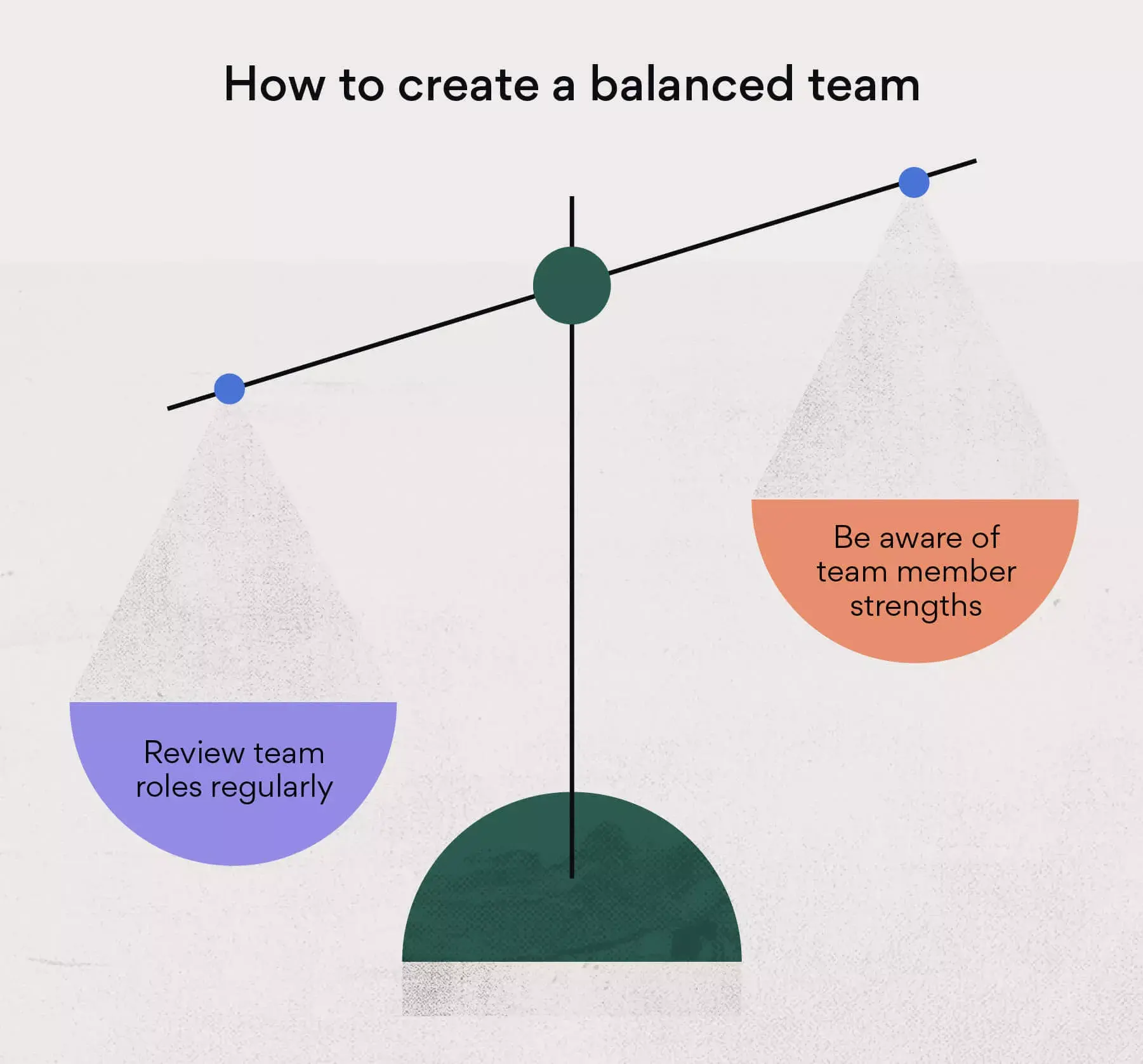
Most teams won't have people to fill all nine roles, and that's OK. The key is understanding your team structure and knowing how to work with the team you have. Focus on these three strategies:
Build on strengths: Assign work that aligns with natural abilities
Assess gaps: Identify missing roles and adjust accordingly
Review regularly: Reassess as team members grow and develop
Build on your team's strengths
Every team role has strengths and weaknesses. Being aware of these helps you create a more balanced team:
Plants: May be less comfortable communicating, but excel at solving complex problems
Completer finishers: May have less experience with teamwork, but always deliver on time
When assigning responsibilities, focus on each team member's strengths using practice tasks or employee assessments. When team members can use their strengths daily, your team will function at its best.
No more silos: Optimizing your organizational structure for stronger cross-team collaboration
In this ebook, learn how to structure your organization to prevent silos, move faster, and stay aligned in the face of change.
Assess gaps in your team
If you have too many individuals with the same strengths, clashes and gaps can occur. For example, too many thought-oriented people and not enough action-oriented people can lead to ideas with no execution.
Identify gaps through regular assessments of both individual performance and team dynamics. You can shift responsibilities based on natural behavior and personality types. Team building games are a great way to connect with your team and learn how you work well together.
Review team roles regularly
It's essential to review team roles and responsibilities regularly to build high-performing teams. Use quarterly assessments to evaluate progress and determine whether individuals have improved their skills, would be better suited to a different role, or could benefit from additional training.
For example, an introverted, thought-oriented person may gain confidence and develop communication skills over time. With regular evaluation, you might discover they've become more people-oriented and would thrive in a leadership role.
Read: How to effectively manage your team’s workloadTeam management tools
Team management tools provide clarity when assigning tasks and completing projects as a group. When everyone has visibility into who's doing what by when, the entire team functions better together.
Workload management
An important part of team management is planning ahead when managing workloads. Workload management involves visualizing schedules, understanding project life cycles, and using tools to gain insight into both people and projects. This is key to keeping projects running smoothly without putting too much pressure on one person.
Resource allocation
Successfully allocating resources is essential to project and team success. Resource allocation helps you determine resource availability, how many resources you need for each project, and which team members are best suited to each project. Creating a resource management plan is a great way to keep projects on track from start to finish.
RACI chart
A roles and responsibilities matrix, also known as a RACI chart, helps teams clarify project roles and figure out who is responsible for a given task. The acronym stands for responsible, accountable, consulted, and informed. To create a RACI chart, outline every task in a project, then assign one of these four labels to each member of your team for each task.
Kanban boards
Kanban boards help team members visualize a project's stage, so you know what's left to bring it to completion. Using cards to represent work items, Kanban boards allow team members to visually plot out projects and workflows. This system provides a clear view of the stage and priority of each initiative.
Read: A beginner's guide to Kanban boardsTeam collaboration tools
Team collaboration is much easier with the right tools. A single collaboration platform helps team members streamline tasks, align goals, manage changes, and share files.
Having a single tool can reduce project risks and improve task management across the board. Making it accessible to all employees helps everyone thrive in their roles.
Build your balanced team with clarity
Using Belbin's nine team roles can help create a balanced work environment, making your team more productive. When you know how to play to your team's strengths, they'll be happier in their roles, and you'll collaborate more efficiently.
Ready to put these insights into action? A work management platform like Asana helps you assign tasks based on team members'strengths, track workloads, and keep everyone aligned on who's doing what. Get started building your balanced, high-performing team today.
No more silos: Optimizing your organizational structure for stronger cross-team collaboration
In this ebook, learn how to structure your organization to prevent silos, move faster, and stay aligned in the face of change.