Asana acquires StackAI — now every human-agent workflow runs in one place.Learn more
Project risk management process: steps and template



85% of Fortune 100 companies choose Asana¹




Summary
A project is most successful when you plan and manage it effectively. Developing your project management skills and implementing proven mitigation strategies can help. But even the most well-developed projects will have risks.
The best way to prevent project risks is to face them head-on. A risk management plan helps you anticipate problems and prepare your team to respond quickly.
If you've never developed a risk management process before, you may have suffered the consequences of unexpected risks on past projects. Learn more about project risk management and try these six easy steps to build your own risk management plan.
Master AI-Powered Workflow Optimization
Ready to revolutionize your team's productivity with AI you can trust? Join industry leaders from Asana and Anthropic to learn proven strategies for implementing AI across your workflow stages and unlock the full potential of Asana's AI Studio.
What is a risk management process?
The risk management process is a structured approach for identifying, assessing, and responding to potential issues before they disrupt your project. It typically includes five to six steps: risk identification, risk assessment, risk treatment, risk response planning, risk monitoring, and risk communication.
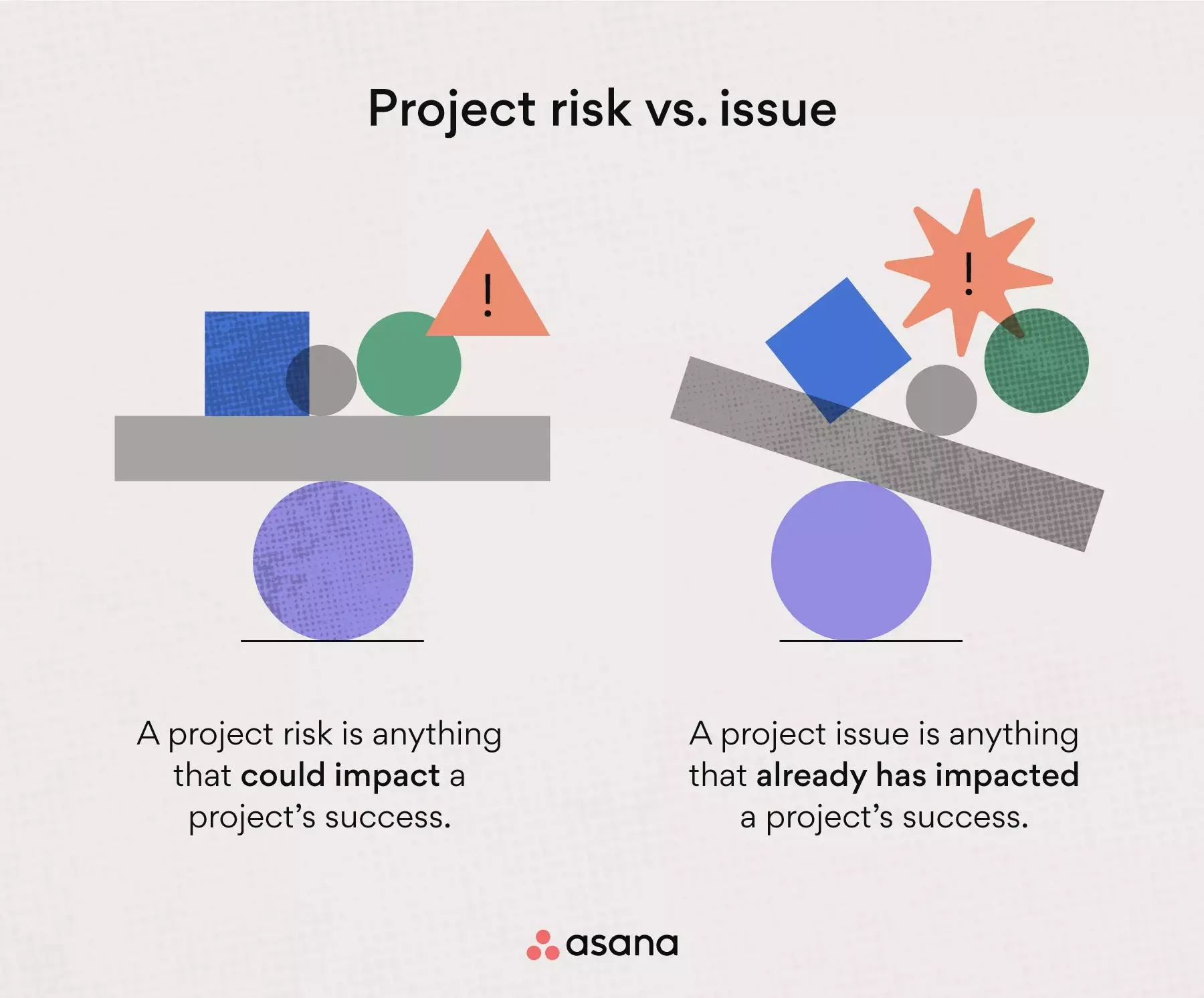
Every project, no matter how well planned, faces financial risks and operational risks, from missed deadlines to unexpected budget challenges. Without clear risk response strategies, these issues can quickly derail progress.
Effective risk management in project management means having a plan to address surprises before they happen. By pinpointing types of risk early, you'll be prepared, not panicked, when an issue arises. The risk management process also keeps your communication clear with stakeholders.
Ultimately, a strong risk management plan doesn't just prevent vulnerabilities; it gives you control, helping you steer your project smoothly past obstacles.
Types of project risks
Before you can manage risks, you need to know what you're looking for. Project risks come in many forms, and understanding the different categories helps your team identify potential issues more effectively.
Here are the main types of project risks to watch for:
Financial risks: Budget overruns, unexpected costs, funding cuts, or changes in resource pricing that could strain your project's finances.
Operational risks: Process breakdowns, workflow inefficiencies, or resource shortages that disrupt day-to-day project execution.
Technical risks: Technology failures, software bugs, integration challenges, or gaps in technical expertise that could delay progress.
External risks: Market shifts, regulatory changes, natural disasters, or vendor issues beyond your team's direct control.
Strategic risks: Misalignment between project goals and organizational priorities, or shifts in business direction that affect project relevance.
By categorizing risks this way, you'll have a clearer picture of where vulnerabilities might arise.
Steps of the risk management process
Managing risks in any project requires a methodical approach, but don't worry, it's a lot like planning for a big event. Just as you'd prepare for unexpected weather or last-minute cancellations, each step of the risk management process helps you plan for surprises.
Step 1: Risk identification
The first step is identifying every potential risk that could disrupt your project. Think broadly here; issues can arise from internal factors, such as resource limitations, or from external factors, such as natural disasters. Involving your entire team and engaging with stakeholders provides different perspectives.
There are a variety of ways to begin the risk identification process, including:
Interview project stakeholders. The best way to identify project risks is to ask stakeholders, leadership, and experts in the topic. If they've run similar projects, ask them about the risks they encountered and how you can prevent them.
Brainstorm potential risks with your project team. Your project team is who you will work with day in and day out. Before you get started, ask them what they see as potential risks and consider hosting a brainstorming session.
Document and ratify your assumptions. According to the Guide to Project Management Body of Knowledge (PMBOK®), assumptions are anything about the project you think will be true, without being a guaranteed fact. If the assumptions you have aren't actually true, the foundations of your project may become unstable.
Check your checklists. See if your team or department has built a checklist of common risks. If they haven't, start documenting one to set yourself up for success on future projects.
Perform a risk assessment matrix. A risk assessment matrix categorizes severity into four buckets: catastrophic, critical, marginal, and minor. This helps prioritize which potential risks to tackle first.
![[Old Product UI] Project risk management blank risk register example (Lists)](https://assets.asana.biz/transform/90101385-147e-4f8b-95f9-9d5e5a4c76e9/inline-project-risk-management-process-1-2x?io=transform:fill,width:2560&format=webp)
As you identify important risk events, put them into a risk register template. As the name suggests, a risk register is a dedicated list of all of your project risks. With risk identification in place, you set a foundation for the entire risk management process.
Step 2: Risk assessment
Once risks are identified, it's time to assess their potential impact and likelihood. Risk assessment helps you determine the severity of each risk and its potential impact on your project's success.
Are you dealing with a financial risk that could derail the budget? Or a workflow risk that might cause delays? This step ensures you understand the depth of each risk's impact, which enables better decision-making.
Create a risk management plan templateStep 3: Risk treatment
Not all risks carry the same weight, and that's why risk prioritization is key. Here, you rank risks based on their impact and likelihood. High-impact risks take precedence, while smaller issues fall lower on the list.
By prioritizing effectively, you can allocate resources and attention to mitigating the risks that matter most.
![[Old Product UI] Project risk management prioritized risk register example (Lists)](https://assets.asana.biz/transform/75d02c60-6e9d-4571-853c-0c7c8ce951e7/inline-project-risk-management-process-3-2x?io=transform:fill,width:2560&format=webp)
Step 4: Risk response planning
With prioritized risks in mind, it's time to create your risk management plan. This step includes selecting a risk response strategy that aligns with your project's risk appetite. The four main options are:
Risk avoidance: Preventing the risk by changing the project plan or approach.
Risk mitigation: Reducing the likelihood or impact if the risk does occur.
Risk transfer: Shifting responsibility to another party, such as through insurance or contracts.
Risk acceptance: Acknowledging the risk without action when it doesn't threaten project success.
By creating a clear risk mitigation plan for each identified risk, you're prepared for potential challenges.
Step 5: Risk monitoring and control
The risk management process doesn't stop after planning; continuous risk monitoring is essential. New risks can emerge, and identified risks may evolve, requiring updated strategies.
To do this:
Send regular status updates so your project team and project stakeholders are all on the same page. Remember: risk management should be planned, not reactive.
Check in asynchronously with your individual risk managers. Each risk "owner" should be monitoring their risk event for red flags.
Keep an eye on your risk register for any updates. If the likelihood of a risk changes or the risk plan is updated, that change should be reflected in your risk register.
![[Old Product UI] Project risk management risk register example (Lists)](https://assets.asana.biz/transform/941bf66f-d820-4037-b143-b6ac9d4107e5/inline-project-risk-management-process-4-2x?io=transform:fill,width:2560&format=webp)
Monitoring helps you stay agile, ready to adjust as needed. A risk that seemed minor in the beginning might grow, or risk exposure could change based on project conditions.
Step 6: Risk communication
The final step is communicating risk-related information across the team and with stakeholders. Risk communication ensures that everyone understands the risk management plan, their roles in it, and any adjustments made during the project.
Read: 10 easy steps to boost team collaborationOpen communication fosters transparency and strengthens team commitment to managing risks effectively. After all, a risk is easier to manage when everyone is aware of it and actively working to mitigate its impact.
Get started on your risk management process by browsing our template gallery or building your own custom method.
How to develop a risk management plan
A solid risk management plan is the backbone of any successful project. It's your go-to document for handling financial risks, operational risks, and everything in between.
Here's how to build one that keeps your risk management process top of mind. Let's use the example of launching a new mobile app to illustrate each step.
1. Defining objectives and project scope
Start by clarifying your project's objectives and scope; this foundation will guide every decision in the risk management process. When your team understands the project's goals and boundaries, they'll have a clearer sense of which risks could affect progress.
Example: For our mobile app launch, the objectives are to go live within six months, stay within the set budget, and deliver a user-friendly experience with minimal bugs.
The project scope covers everything from design and development to testing and a limited marketing rollout. These defined boundaries help the team respond to potential risks that might interfere with these goals.
2. Identifying risks in the planning process
With objectives and scope in place, the next step is identifying risks. Engage your team to think through potential risk events that could affect your timeline, budget, or resources.
Example: For the app launch, identified risks might include:
Technical issues: Bugs or performance issues could delay launch.
Financial constraints: Unexpected costs may arise, such as additional testing or last-minute updates.
Resource limitations: Staff turnover or competing projects might lead to delays or reduced productivity.
3. Assigning clear roles and responsibilities
Every effective risk management plan assigns clear responsibilities. Define who will oversee risk assessment, manage the risk register, and lead risk mitigation efforts. By assigning roles, you ensure accountability and streamline decision-making.
Example: For the app launch, the roles might include:
Project manager: Oversees the entire risk management process and updates the risk register.
Lead developer: Monitors technical issues and manages risk mitigation for bugs and performance.
Financial analyst: Tracks project spending and addresses any financial risks.
4. Refining the risk management plan
Once roles are established, it's time to refine the plan. This involves aligning your risk treatment with the project's risk appetite and goals. This step allows you to customize the plan to meet the unique demands of your project.
Example: For the app, the team might decide on:
Risk avoidance by excluding complex features that could delay the timeline.
Risk mitigation by scheduling additional testing phases to catch bugs early.
Risk transfer by partnering with a third-party developer for specific features.
5. Using risk management plan templates
Using a risk management plan template can simplify the process and ensure you don't miss critical steps. Templates often include pre-structured sections for risk identification, risk analysis, and response plans. Many templates also help you track risk exposure over time.
Example: The team selects a template that includes fields for risk description, probability, impact, and assigned owner. This makes it easy to log each identified risk and monitor its status as the app development progresses.
Risk management frameworks
A risk management framework provides the structure needed to approach risk consistently across projects. Here's how three common frameworks compare:
Framework | Best for | Key focus |
ISO 31000 | Organizations across industries | Global risk principles and adaptable processes |
COSO | Enterprise risk management | Aligning risk strategies with business objectives |
NIST | Technology and cybersecurity | Protecting information and digital assets |
The right framework depends on your project's size, complexity, and industry requirements.
Best practices for an effective risk management process
Strengthening your approach to risk management involves:
Prioritizing stakeholder engagement early to get a broad perspective on possible risks.
Using a risk register that effectively tracks and prioritizes concerns.
Reviewing and updating the plan regularly to address new issues as they arise.
Matching response strategies to the team's goals to keep decisions aligned.
These practices help your team catch risks early and respond before small issues become major setbacks.
Challenges in the risk management process
Even a well-prepared risk management plan faces hurdles. Key challenges include:
Identifying risks early: Spotting potential issues can be difficult, especially when unforeseen operational or financial problems arise.
Maintaining an updated risk register: Keeping the register current requires dedicated attention and regular updates.
Effective communication: Ensuring stakeholders stay informed can be demanding and time-consuming.
Sustaining commitment: Keeping the team engaged in risk management can be challenging under tight deadlines.
Addressing these challenges with clear communication, regular monitoring, and the flexibility to adapt strategies will support a smoother process.
The goal of project risk management
Implementing a risk management plan can help prepare your team for unexpected events. But truthfully, not every project needs an in-depth risk management plan. If your project is relatively straightforward, you might just need a quick chat with your team members to brainstorm and address any potential risks.
These projects are small in scope, don't take up a lot of team member time or outside resources (like budget or bandwidth), and may be processes you've successfully completed before.
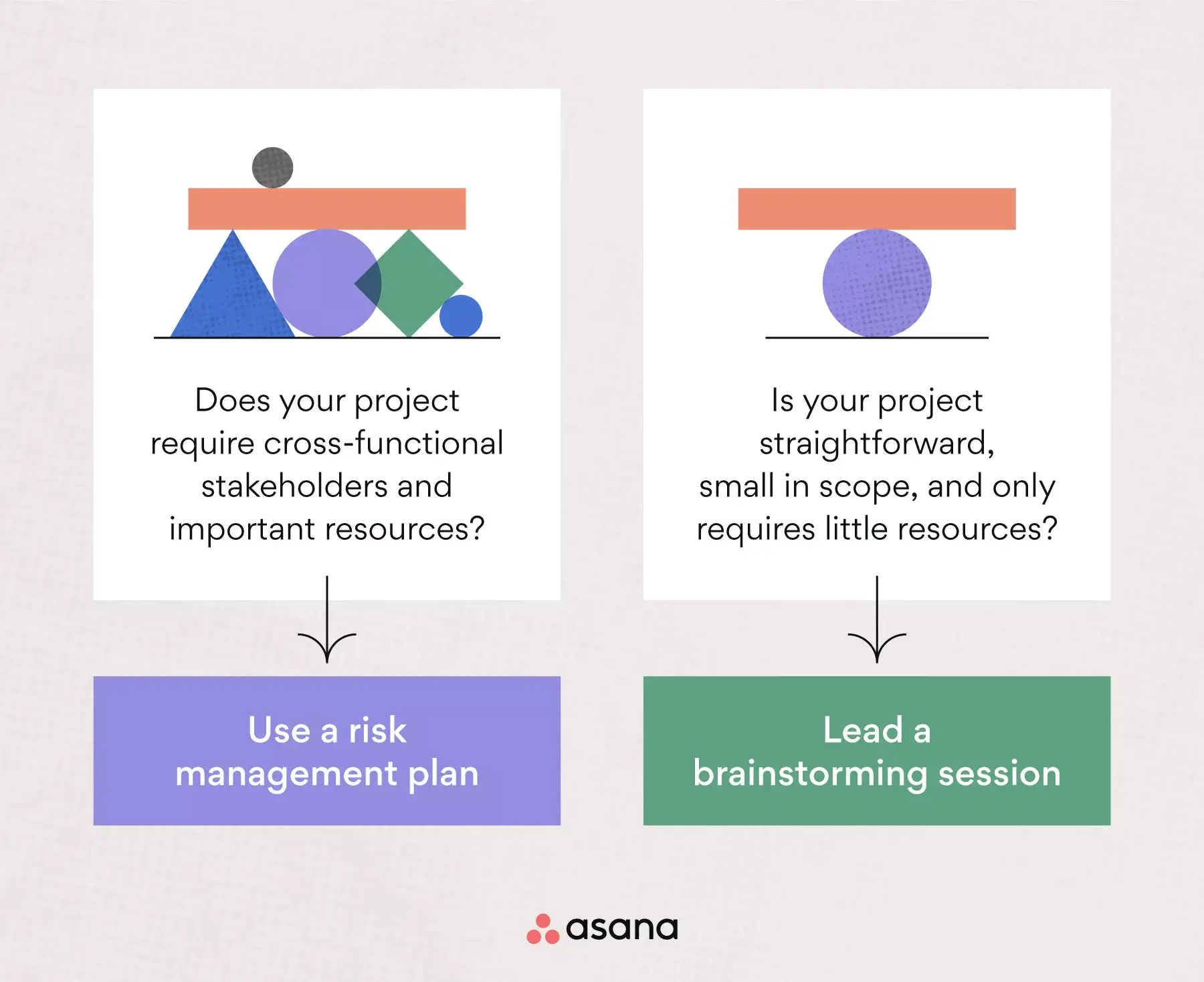
If you're working on a complex initiative, you'd benefit from a formal risk management plan. Signs you need one include:
Multiple cross-functional stakeholders are involved
Significant team time or budget is at stake
The project has strict scope or deadline requirements
Incorporate project risk management into your next project planning session
Successful projects have great plans, and risk management is a key to that early-stage planning process. Make sure to incorporate your project risk management strategy into any early-stage planning documents, like your project brief. That way, everyone has access to your risk management plan, and they can respond to any high risks that do occur.
For more project planning guidance, find out how Asana can help you track goals, define milestones, and communicate all in one place. Get started today.
Create a risk management plan template