Asana acquires StackAI — now every human-agent workflow runs in one place.Learn more
Business etiquette basics for meetings, email & remote


Summary
People in the business world have different expectations about eye contact, body language, dress code, and dining etiquette, just to name a few. While many companies have shifted to a more casual culture, understanding proper business etiquette can go a long way. In this piece, we'll explain what business etiquette is, why it matters, and the essential rules to help you succeed in any professional setting.
Optimizing your tech stack for the AI era
From security risks to productivity loss, app sprawl may be costing you more than you think. Our latest guide reveals the true impact of an oversized tech stack and provides strategies to optimize your IT spend. Don't let hidden costs hold you back:
What is business etiquette?
Business etiquette is the set of unwritten rules and professional behaviors that guide how you interact with colleagues, clients, and partners in the workplace. It includes everything from how you greet people and dress to how you communicate in meetings and emails. While specific norms vary by culture and industry, following business etiquette helps you build trust, show respect, and present a professional image.
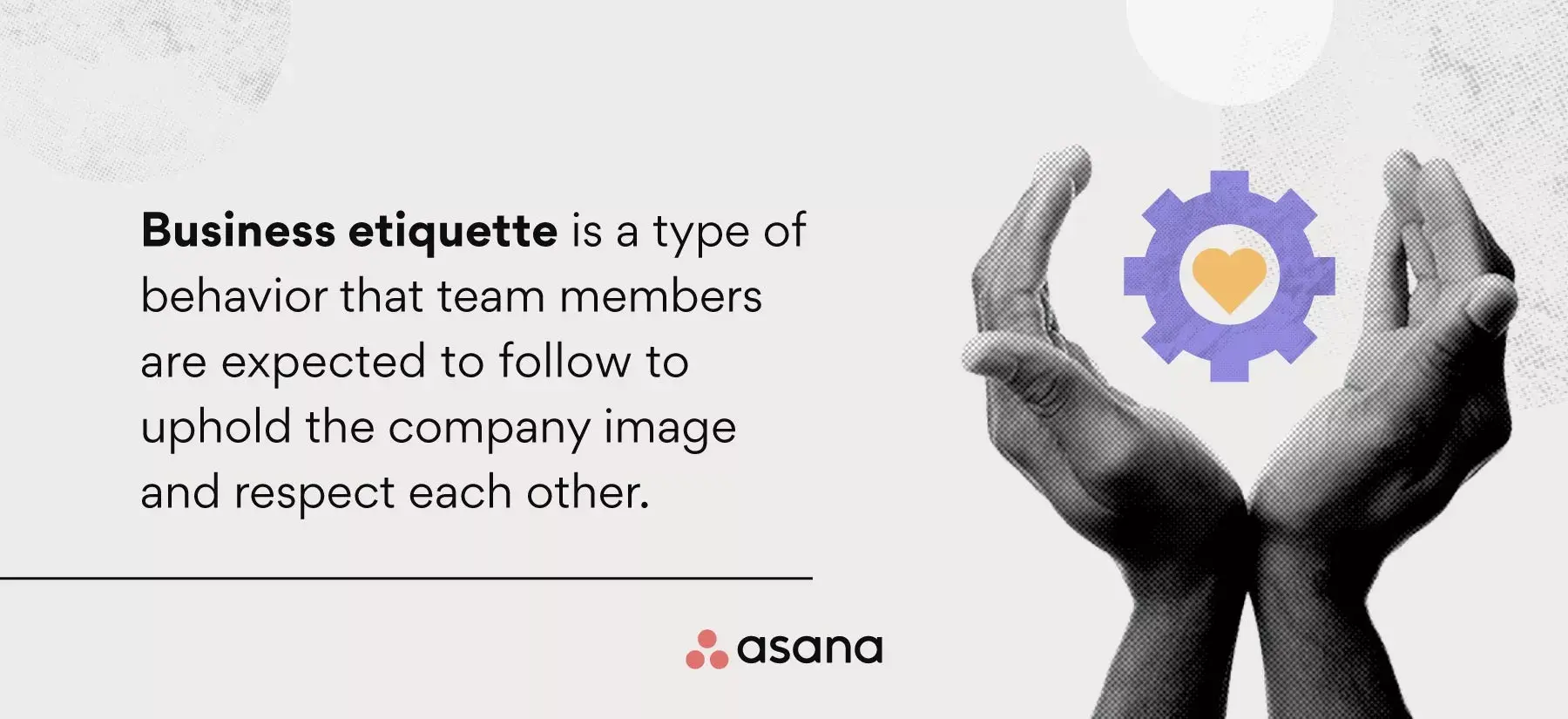
Business etiquette is sometimes unspoken, but more often than not, team members will agree upon the basic rules so everyone presents a united image. When team members follow business etiquette, it builds effective communication in the workplace.
Why business etiquette matters
Business etiquette shapes how colleagues, clients, and partners perceive you and your organization. Here's why it matters:
Builds trust and credibility: When you consistently follow professional norms, you open doors to new opportunities and stronger relationships.
Increases team productivity: Teams that communicate respectfully spend less time navigating misunderstandings and more time doing meaningful work, boosting overall team effectiveness.
Supports career advancement: Leaders notice team members who handle themselves well in meetings and treat others with respect. These soft skills often matter as much as technical expertise.
No more silos: Optimizing your organizational structure for stronger cross-team collaboration
In this ebook, learn how to structure your organization to prevent silos, move faster, and stay aligned in the face of change.

The 5 basics of business etiquette
The basics of business etiquette vary by culture, which can feel intimidating when you're new to a company. However, some universal constants can help you navigate group dynamics while you learn your team's specific norms.
These five important business courtesies can help you make a solid first impression and show respect for your team members.
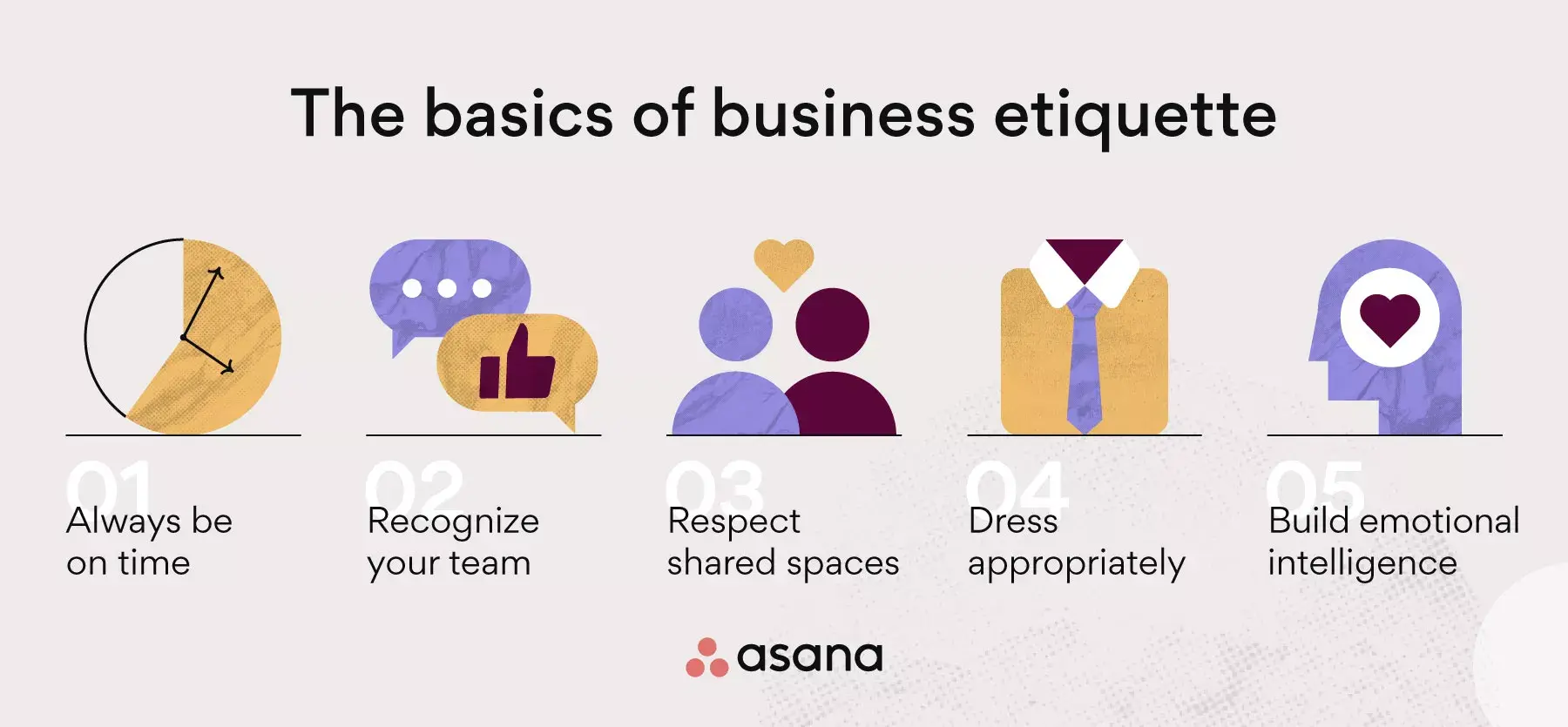
1. Be on time
Whether you're attending an interview or daily stand-up meeting, being on time in a work environment shows that you respect everyone's schedule. If punctuality isn't something you've prioritized in the past, brush up on some time management tips to keep yourself organized and aware of your to-do list.
There are nuances to being on time, as some cultures operate on a system of being slightly late to everything. But when in doubt, show up on time and adjust from there if necessary.
2. Recognize your team
Acknowledging others is proper business etiquette for both casual and formal work environments. When someone enters the room at a business dinner or meeting, greet them and say hello appropriately, whether by shaking hands or following another cultural custom.
The same rule applies if you work from home and attend daily Zoom meetings. You may not be required to get on camera in every business meeting, but speaking up and taking the time to recognize your team members can let everyone know you're listening and make others feel noticed.
3. Dress appropriately
Dressing appropriately is subjective and will depend on whether you work in an office or from home. Some companies that work in the office every day will expect everyone to dress in business casual attire because much of the work involves face time with stakeholders or clients. Other companies that work in a hybrid environment may encourage team members to dress casually in order to promote comfort and productivity.
If you're unsure about appropriate business attire, ask your manager for guidance before your first day of work. You can also think back to your interview and recall what others were wearing to help you dress accordingly.
4. Respect shared spaces
Even if you work remotely, you may go into the office on occasion or share virtual spaces with your team members. Office spaces you may share with team members include a kitchen, bathroom, printer and copy room, and lounge area. Virtual spaces you may share include Google Drive folders and project management software.
The way you treat shared spaces will reflect on you as a professional, so it's important that you label things correctly, stay organized, and respect others who also use these spaces. Business etiquette applies to shared spaces, whether you're cleaning up after yourself physically or following company processes online.
5. Build emotional intelligence
Emotional intelligence is the ability to recognize, regulate, and understand emotions in yourself and in others. Effective emotional intelligence skills can help you empathize with team members and overcome challenges. While emotional intelligence isn't a direct rule of business etiquette, it will help you in the workplace, no matter what conflicts arise.
For example, imagine you're behind on work, and your boss suddenly adds a large, time-sensitive project to your plate. With emotional intelligence skills, you can speak with your manager to understand the relative priority of the work. Since you're already behind on work, you can express your worry about becoming overworked and work with your manager to come up with a solution for which work you can deprioritize or delegate less important tasks.
No more silos: Optimizing your organizational structure for stronger cross-team collaboration
In this ebook, learn how to structure your organization to prevent silos, move faster, and stay aligned in the face of change.
Meeting etiquette essentials
Meetings are where much of your professional reputation takes shape. Whether you're leading or attending, how you conduct yourself in meetings affects how colleagues perceive your competence and professionalism.
Follow these meeting etiquette practices to make a positive impression:
Come prepared: Review the agenda beforehand and bring any materials you'll need. If you're leading the meeting, share the agenda in advance so attendees can prepare their contributions.
Arrive on time: Joining late disrupts the flow and signals that you don't value others'time. Aim to arrive a few minutes early, especially for important meetings.
Listen actively: Give speakers your full attention. Avoid checking your phone or multitasking, and use nonverbal cues like nodding to show you're engaged.
Contribute thoughtfully: Share your ideas clearly and concisely. Avoid interrupting others, and wait for natural pauses to add your perspective.
Follow up promptly: After the meeting, send any promised materials and complete your action items on time. This demonstrates reliability and respect for the team's collective goals.
Business etiquette for remote and hybrid workers
With the transition to increasingly virtual teams, the definition and practice of business etiquette has changed. In person, you may need a polite, firm handshake and the right attire, but when working remotely, you'll need to know the basics of email, phone, and video etiquette. Those managing a hybrid work schedule face the added challenge of navigating both environments, making flexibility and awareness even more important.
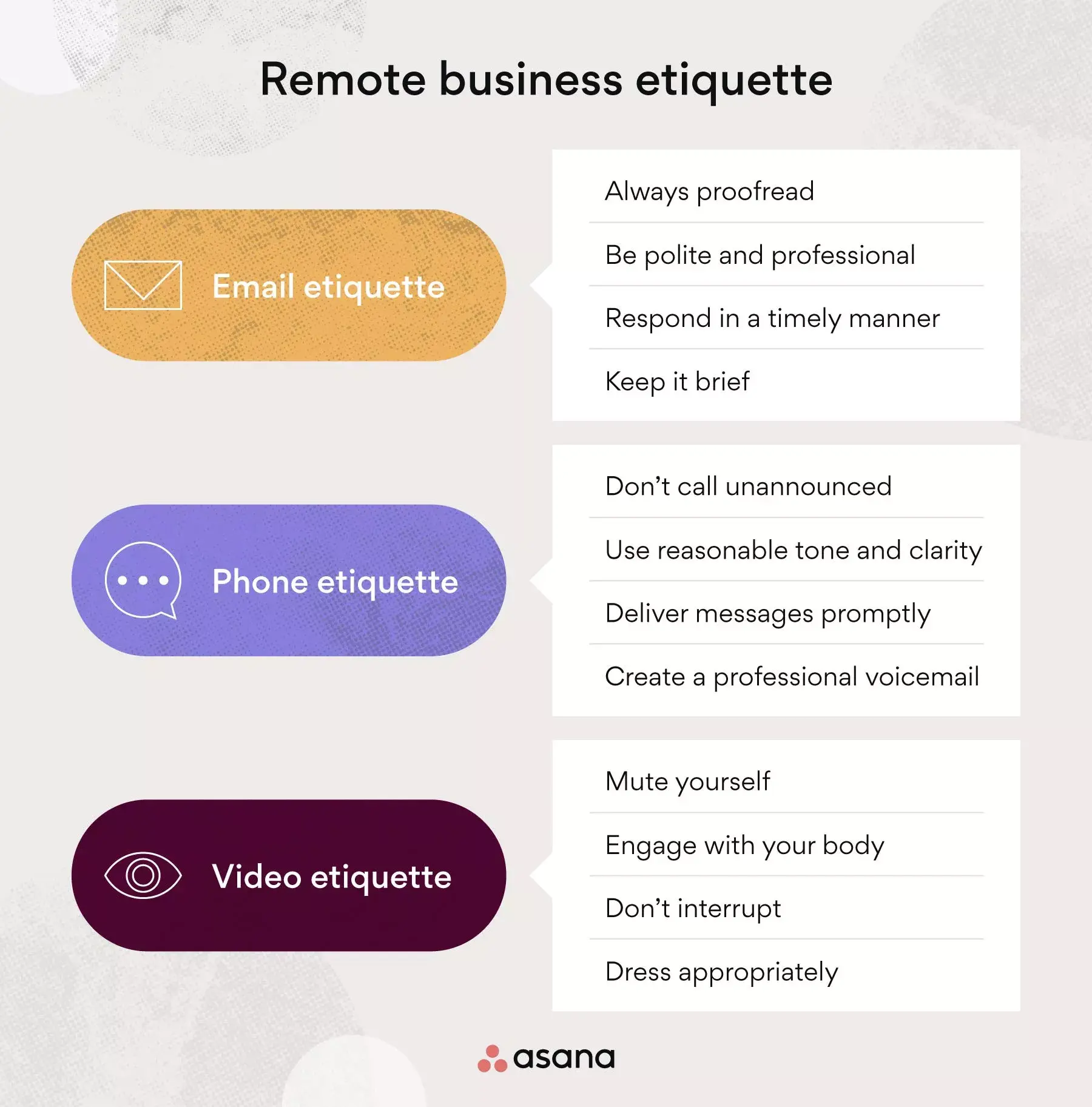
Email and team communication etiquette
Writing an email or communicating through tools like Slack or Asana seems simple, but professional communication online differs from personal communication. These tips will help you maintain credibility and clarity in every message.
Proofread: Proofreading your emails is a hard rule of thumb that you shouldn't ignore. While your email or project management platform may have a built-in proofreading tool, you should also look over your email before sending it out, just in case.
Be polite and professional: Even though you're not speaking face-to-face with your email recipient, your tone will come through in your words. It's important to be polite and professional in your copy. For example, you can use upbeat phrases like: "I hope you... thanks for... just a friendly reminder... please let me know... looking forward to hearing from you."
Respond in a timely manner: Whenever another team member or client reaches out to you, they're doing so for a reason. Proper email and team communication etiquette means responding promptly, even if that means setting up an automatic reply when you're out of the office. While you don't need to respond within minutes, aim to respond within one or two business days.
Keep it brief: Shorter email copy gets your point across quickly and saves your reader time. When you hide the main objective of your message within a lengthy email, your reader may be less likely to respond in the way you hope for.
Remember that who you're writing to may make a difference in your email or online content. For example, if you're communicating with other team members via Asana and Slack, you can use a more casual tone, whereas client emails should be more formal.
Phone etiquette
Business communication often occurs over the phone. When speaking to clients or business partners on the phone, consider the following ways to uphold business etiquette.
Don't call unannounced: Everyone in the business world has a schedule to follow, whether they're working around a strict project timeline or trying to prioritize a heavy workload. When you need to talk to someone on the phone, send them an email first to schedule your call. Calling unannounced can be considered bad manners because the call recipient may be unprepared to talk to you.
Use reasonable tone and clarity: Your tone of voice is important on work phone calls. You'll need to keep a polite tone when speaking to team members or clients, and be aware of your volume and clarity as well. If you speak too loudly or mumble on a professional call, your recipient may not receive your message the way you hope they will. Tone and communication can also vary based on culture, so keep cultural intelligence in mind when on the phone.
Deliver messages promptly: Just like with work emails, it's important to respond to work voicemails promptly. You may receive emails from team members or clients asking to schedule phone calls. Respond to these emails quickly with the best time you're available to talk on the phone.
Create a professional voicemail: Creating a professional voicemail for when you're unavailable is proper business etiquette because it lets people know who you are, what you do, and that you're unavailable. They can then leave you messages explaining why they're calling.
Video etiquette
Video is one of the most popular ways for remote workers to connect. With this method of communication, you get the benefit of speaking with many of your team members in real time, so there are some video etiquette basics you should know.
Mute yourself: One of the biggest issues team members face on video calls is background noise coming from those who aren't speaking. This issue has a simple fix: mute yourself when you aren't the speaker. Muting yourself will ensure your microphone is silenced, so others can have the virtual room's full attention.
Engage with your body: When on a video call, others can see how you non-verbally interact with the speaker. If you're looking down or you're too relaxed in your seat, you may send the message that you're uninterested in the conversation. Sitting up straight, looking alert, and using nonverbal communication to show you're engaged lets the speaker know you're paying attention.
Don't interrupt: Interrupting someone on a video call can be especially disruptive. Technology can't always keep up with multiple people speaking on a video call, so interruptions can cause glitches and confusion for everyone involved.
Dress appropriately: Video calls may only show your clothes from the waist up, but it's still important to dress appropriately for the occasion. Your attire for video calls should follow your company's dress code. Also, consider your personal hygiene when on camera.
Working from home makes it less common for you to interact with team members and clients in person, but don't forget that virtual interactions still leave lasting impressions. When in doubt, approach these interactions with the same business etiquette and care as you would for an in-person conversation.
Cross-cultural business etiquette
In today's global workplace, you'll likely collaborate with colleagues and clients from different cultural backgrounds. What's considered polite in one culture may come across differently in another, so approaching cross-cultural interactions with curiosity and respect is essential.
Before working with international partners, take time to research basic customs. Here are some areas where norms commonly differ:
Etiquette area | What varies |
Greetings | Handshakes, bows, or other gestures |
Punctuality | Strict timeliness vs. flexible start times |
Communication style | Direct feedback vs. indirect suggestions |
Relationship building | Business-first vs. personal connection first |
When in doubt, observe and ask questions. Most people appreciate a genuine interest in their customs and will gladly share guidance.
Remember that cultural intelligence is a skill you can develop over time. Each interaction teaches you something new, helping you become a more effective global professional.
Strengthen team communication with business etiquette
The goal of business etiquette is to present a united company image, foster mutual respect for team members, and improve communication in the workplace. When teams communicate effectively, they do better work.
Effective communication doesn't stop there. Using software can help your team work together to meet deadlines and reach goals. With team communication software, you can improve communication among team members by ensuring everyone receives the right information at the right time. Get started with a platform that keeps your team aligned and working together seamlessly.
No more silos: Optimizing your organizational structure for stronger cross-team collaboration
In this ebook, learn how to structure your organization to prevent silos, move faster, and stay aligned in the face of change.